WHAT IS CLIMATE CHANGE?
It’s one thing to read about climate change and quite another to actually change your lifestyle.
And how would that even work? Are we supposed to start living like we did in the Stone Age again?! When something feels overwhelming or difficult, it’s easy to give up before you’ve even had a chance to buy your first organic apple or sort your first glass jars. That’s when it’s important to remember what all mountain climbers know:
Every journey begins with a small step!
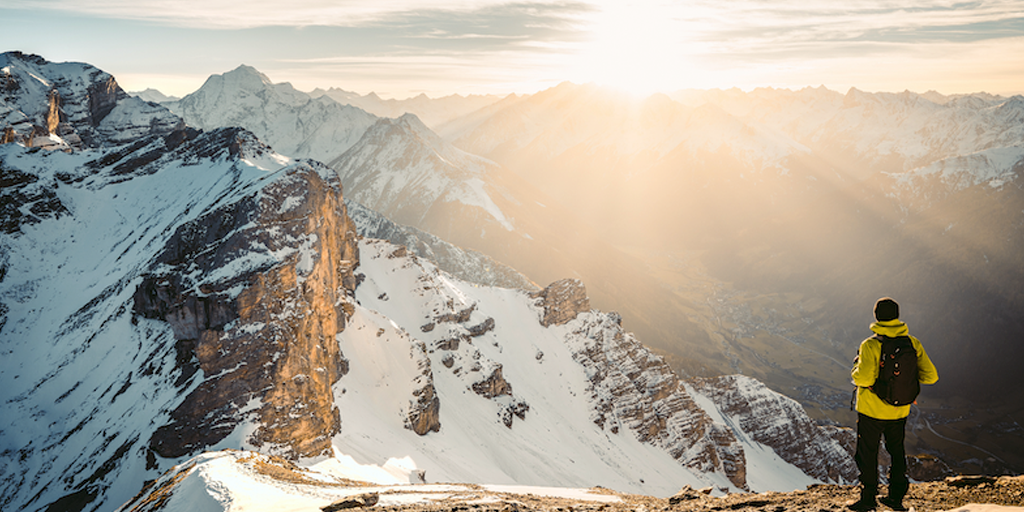
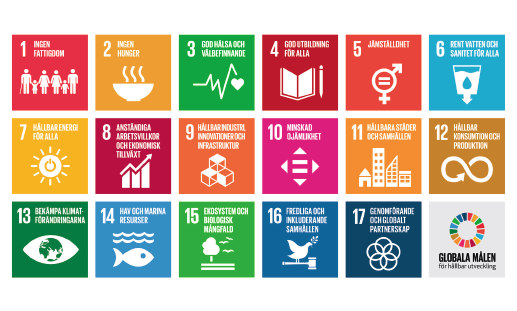
– Every journey begins with a small step. In fact, world leaders took a big step toward a better world in 2015. They drew up a list of 17 goals for a better world. All countries will now work together to achieve the Global Goals by 2030.
We want to achieve these goals in order to accomplish, among other things, the following four amazing things:
- • To eliminate extreme poverty
- • Reduced inequality and injustice in the world
- • More work toward peace and justice for all
- • A solution to the climate crisis
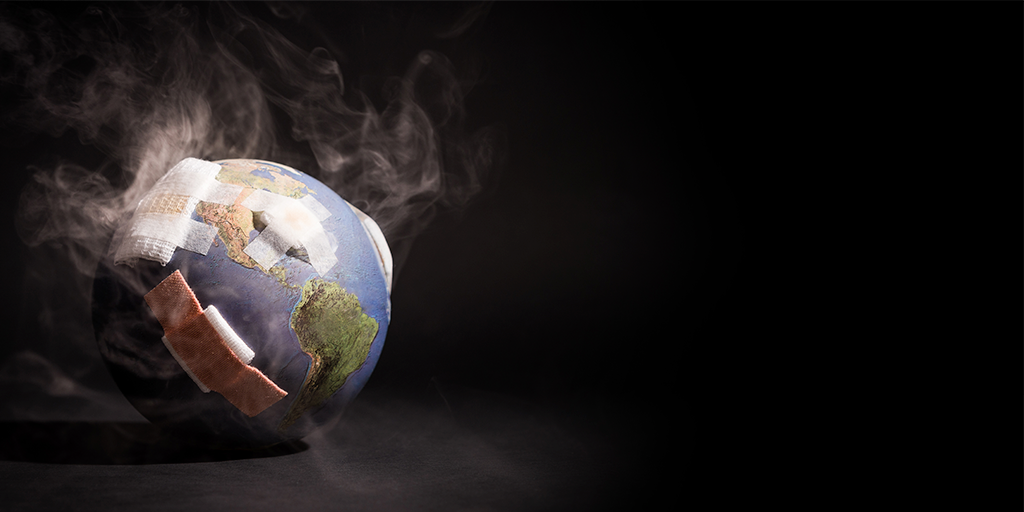
What exactly is climate change?
You may have heard the term “climate change” and seen news reports about the various problems it has caused. In some countries, it rains so heavily that the streets are flooded, while other countries suffer from such severe drought and heat that it’s impossible to grow food or spend time outdoors.
Climate change is causing major problems around the world. Countries affected by drought are facing shortages of drinking water. In cities hit by flooding, houses are destroyed and roads are washed away. Sweden is also affected by climate change. In 2005, Storm Gudrun toppled over 200 million trees, causing power outages for more than 400,000 people. In 2018, the summer was the hottest in 260 years. The crops dried up, causing many cows and horses to go without enough food.
Climate and Weather
Climate and weather are actually two different things. Weather describes the conditions over the next few days. For example, the meteorologist on TV might say that tomorrow it will be +5 °C, windy, and drizzly.
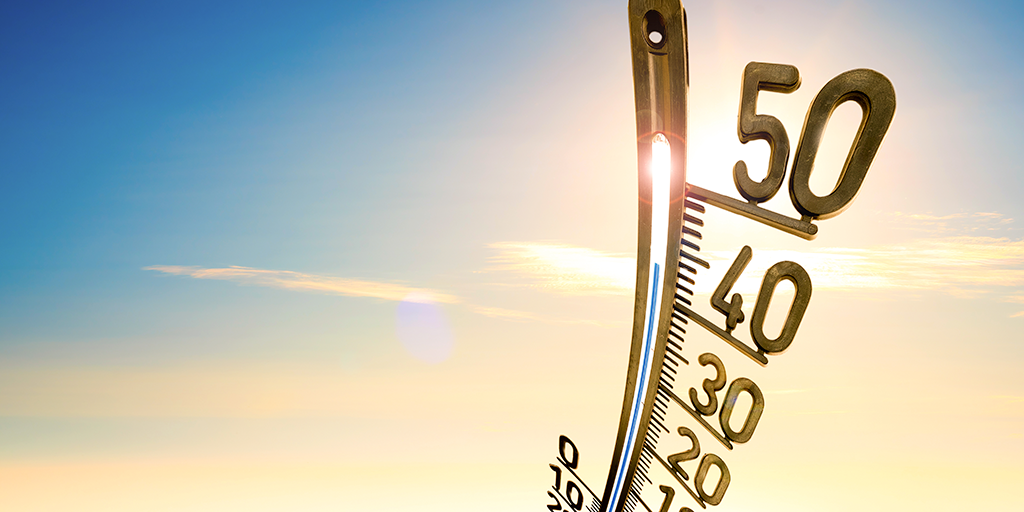
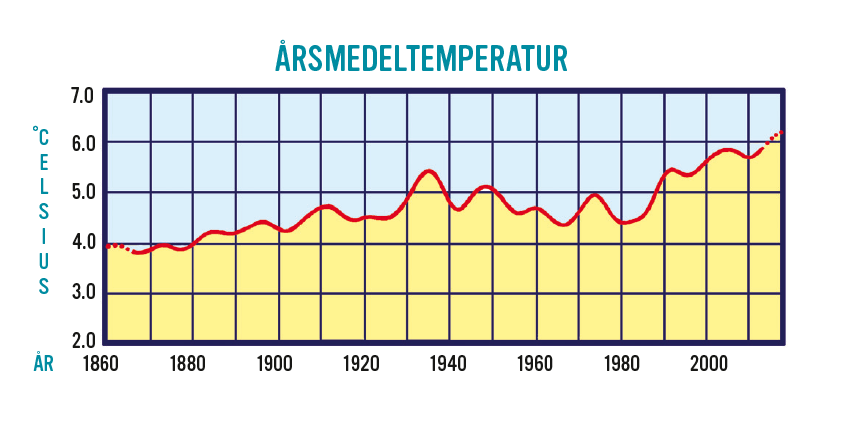
Climate describes what the weather is like over long periods in a given location. Sweden has different climate zones because our country is long and large. Read more about climate zones at SMHI. The average temperature in Sweden has risen since we began recording temperatures. 2020 was the warmest year on record both in Sweden and in Stockholm, where the annual average temperature reached 9.7°C.
It’s common for the weather to vary a bit. Our Swedish seasons aren’t the same every year. We might have a cold, snowy Christmas one year and a rainy, green Christmas the next. It’s only when temperatures remain above freezing during Christmas for twenty years in a row that we can start talking about climate change.
SMHI is a Swedish expert agency with a global perspective and a vital role in forecasting changes in weather, water, and climate. Based on scientific principles and through knowledge, research, and services, it helps enhance the sustainability of society as a whole.
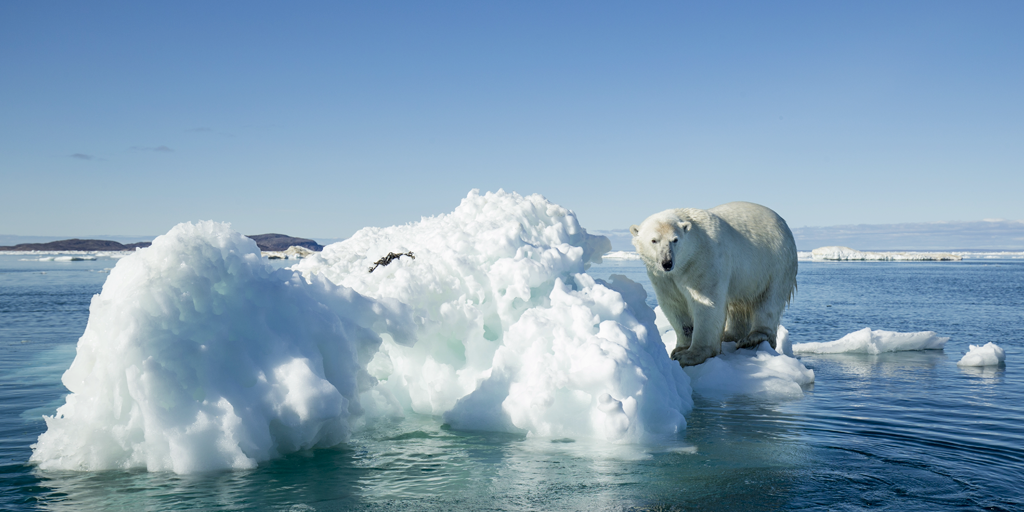
Climate scientists
People who study climate change are called climate scientists. There are various ways to conduct climate research. Some scientists drill deep into the ice in Antarctica and retrieve ice cores, which they then analyze to study how the climate has varied.
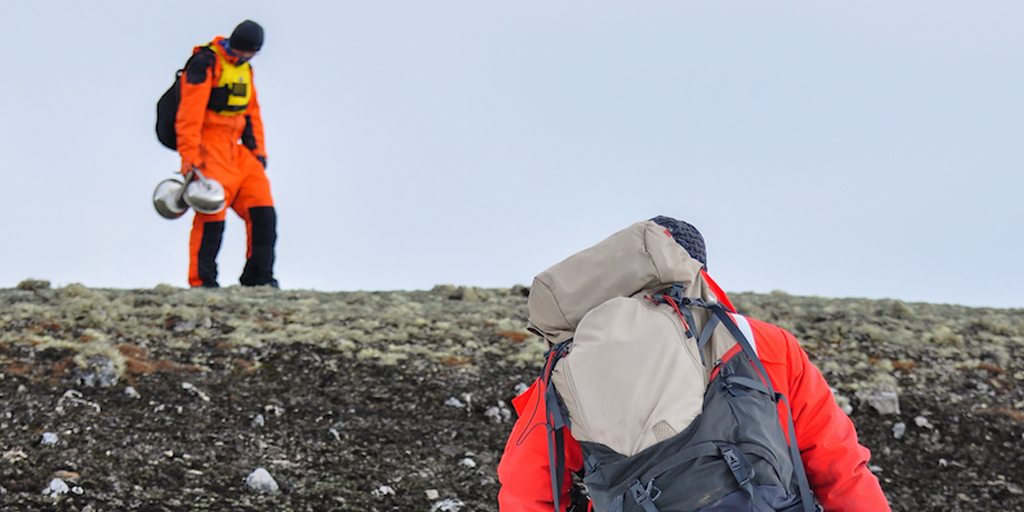
What We Release Into the Air
The emissions produced when we use gasoline and oil are called greenhouse gases. They include methane and carbon dioxide, among others.
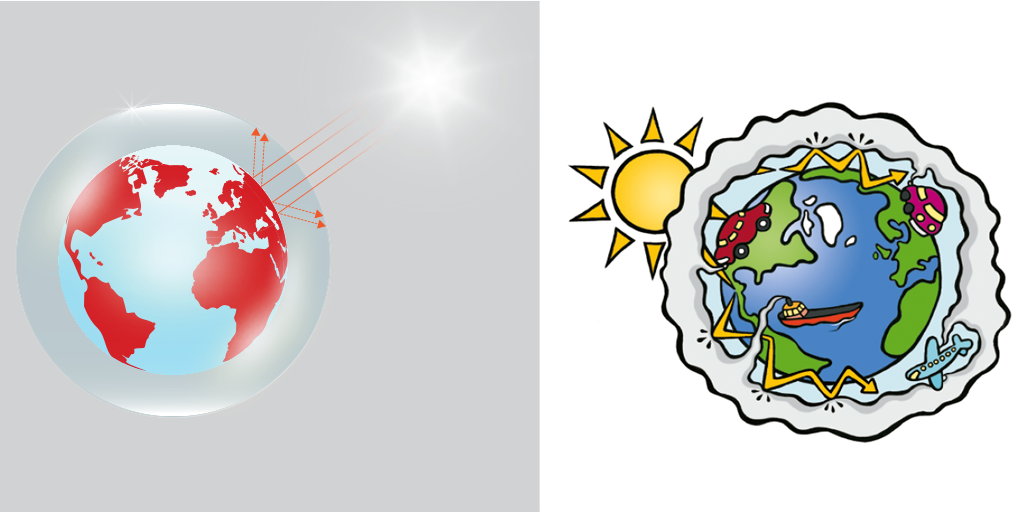
When too much of these gases is released into the air, they form a carbon dioxide blanket around the planet. The sun’s heat, which would otherwise bounce back into space, is then trapped by the Earth’s atmosphere. It gets warmer, the large ice sheets melt, and sea levels rise. This is called global warming or the greenhouse effect.
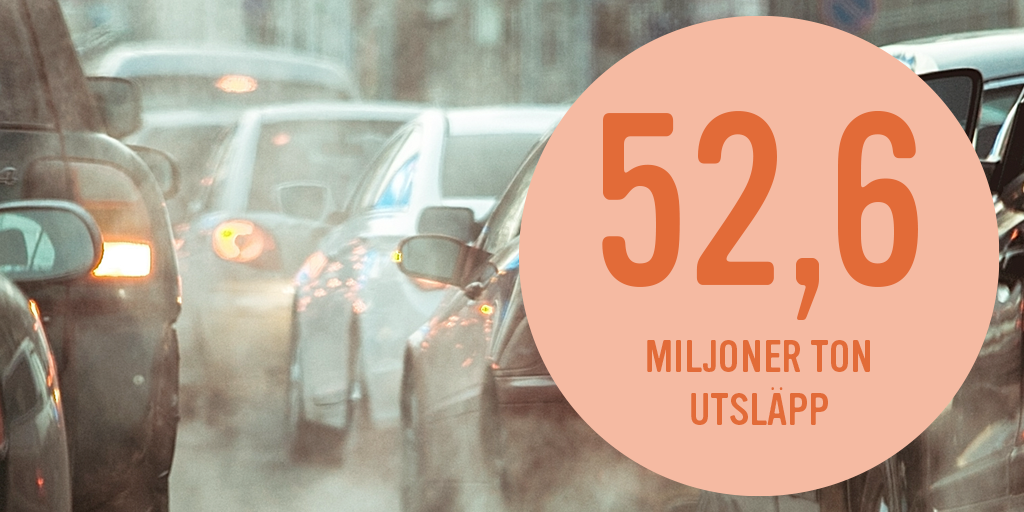
- 32% from transportation and travel within Sweden.
- 33% from industry (manufacturing).
- 14% from our farms.
- 8% of emissions result from the generation of electricity and district heating.
- 6% is due to our use of machinery.
- 3% comes from our use of electrical appliances.
- 2% can be attributed to the heating of homes and commercial buildings.
- 2% from waste
Climate Glossary
Climate Change
When the weather changes over a long period of time, it is called climate change. In the past, temperatures of minus 25 degrees Celsius were common in the winter. Today, winters are milder and shorter, and snow depth has decreased by 10–20 centimeters across almost the entire country. In some areas, the snow also melts
20 days earlier than normal.
Atmosphere
When the weather changes over a long period of time, it is called climate change. In the past, temperatures of minus 25 degrees were common in the winter. Today, winters are milder and shorter, and snow depth has decreased by 10–20 centimeters across almost the entire country. In some areas, the snow also melts 20 days earlier than normal.
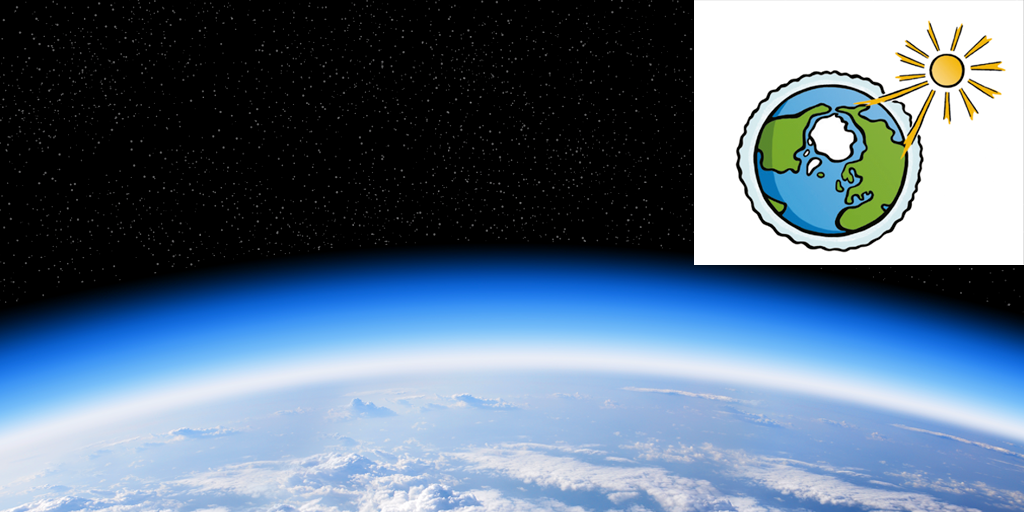
Greenhouse Gases
The Earth’s atmosphere contains what we call greenhouse gases. The most important of these are water vapor, carbon dioxide, methane, and nitrous oxide. Together, they create a natural and powerful greenhouse effect that warms the Earth. Without these gases, the Earth would be 35 degrees colder. In that case, life might not have developed here. Greenhouse gases are not dangerous in and of themselves; rather, they are essential to life. The problem is that we humans emit so much carbon dioxide into the air that the greenhouse effect eventually becomes too strong.
Greenhouse Effect
Greenhouse gases form a thick blanket around the planet. They prevent the sun’s rays from escaping the atmosphere, causing the Earth to get warmer. Just like in a greenhouse.
Carbon Dioxide
Carbon dioxide occurs naturally in the environment, but we humans also produce carbon dioxide, which we release into the atmosphere when we use oil, gasoline, and natural gas in machines such as cars and airplanes. It is the large quantity that is the problem, not the gas itself.
Methane
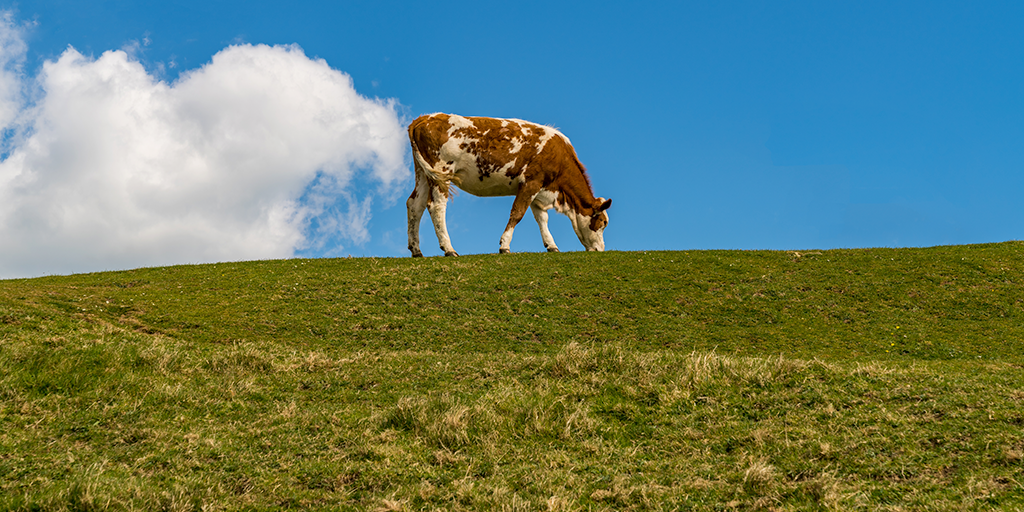
Methane is formed when we burn oil and mine coal. Methane is also stored in the oceans, in the ground, and under glaciers. As the glaciers melt, methane begins to seep into the atmosphere. Methane is also produced in animals’ stomachs; for example, cows fart and burp out large amounts of methane.
Global Warming
When temperatures across most of the planet are rising.
The Swedish Climate
The climate has changed all over the world. In Sweden, it has changed quite a bit. Since we began measuring temperatures in the 1880s, the global average temperature has risen by 1.3 degrees. Over the past 30 years, Sweden’s annual average temperature has risen twice as fast as the global average.
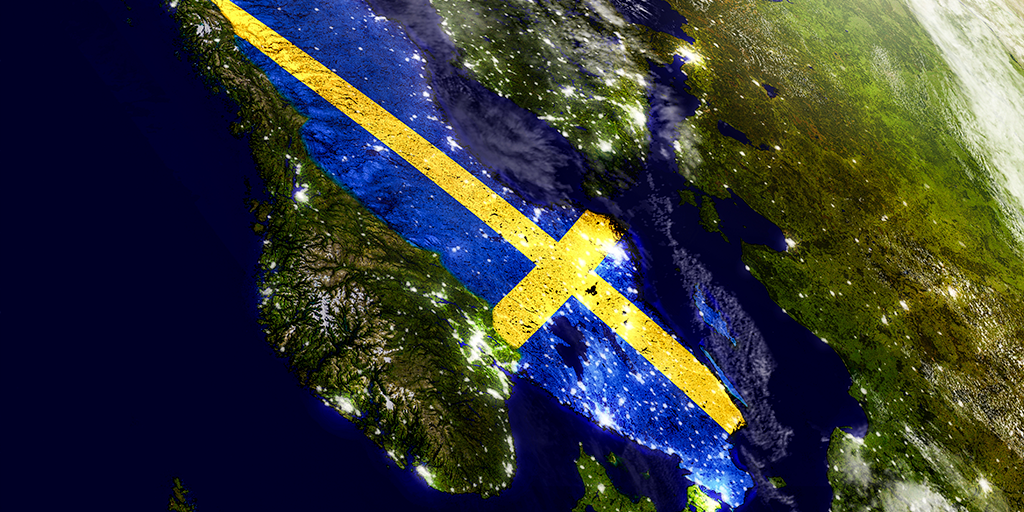
Global warming does not automatically mean that it is always warmer in every country, during every season, and every single year. For example, 2010 was an unusually cold year in Sweden, while globally it was one of the warmest years in modern times. Regional differences do exist, and every year is unique. But if you look at the trend over time, you can see that it is getting warmer, even in Sweden.
Signs of Climate Change in Sweden
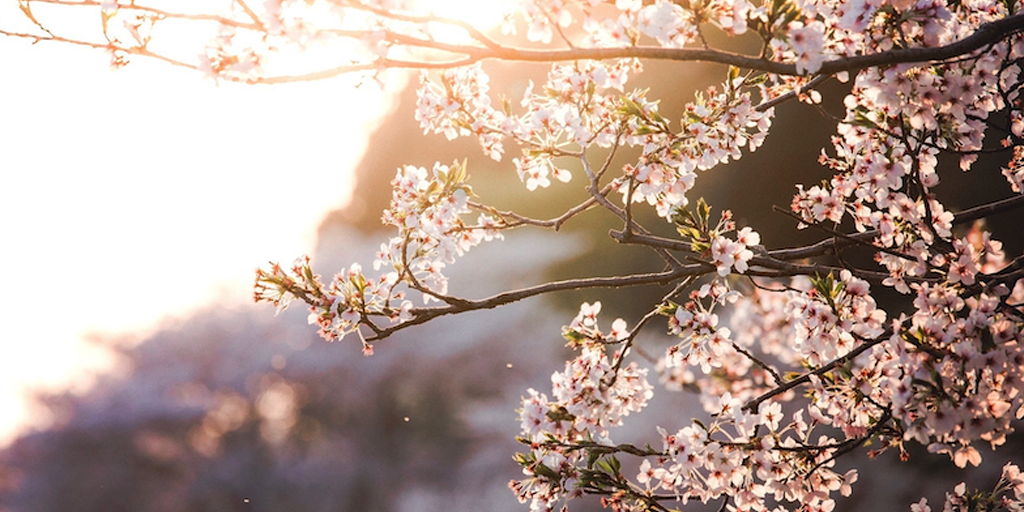
According to SMHI, Sweden’s Meteorological and Hydrological Institute, we can already see several effects of climate change. Winter arrives nearly a month later (compared to the 1960s), while spring, in turn, arrives earlier. This has caused some flowers to bloom about a month earlier. The cherry trees in Kungsträdgården in Stockholm, which usually bloom in April, began to bloom in mid-January 2020.
Faster rise in temperature in northern Sweden
The closer you are to the Arctic, the greater the rise in temperature you experience. Normally, the ice reflects sunlight back into space.
When the ice melts, sunlight is absorbed and the Earth becomes warmer. Northern Sweden is closer to the Arctic. Therefore, the temperature increase is also greater here. According to researchers, this can have a negative impact on spruce trees. Spruce is a sensitive tree that is not adapted to warmer climates.
Will there be more changes in Sweden?
According to SMHI, there will be more rain and more flooding, mainly in southern Sweden.
The rise in temperatures has already resulted in pollen being present in the air almost year-round, which affects everyone with allergies. Rising water levels may also cause saltwater to intrude into Lake Mälaren, where Stockholm draws its fresh water. However, some changes may be seen as positive, such as longer growing seasons that allow us to grow more crops.
Task
Solve the puzzle