OUR PLANET—A SPACESHIP
Have you ever thought about the fact that you’re currently on a space journey? Our planet, Earth, may not be any bigger than a grain of sand in space, but it’s constantly traveling in a circle around the sun. The Earth never stands still; instead, it floats along its orbit day after day.
That is why we can say that Earth is our spaceship. As good astronauts, we must take care of our spaceship, and we do that by protecting the environment.
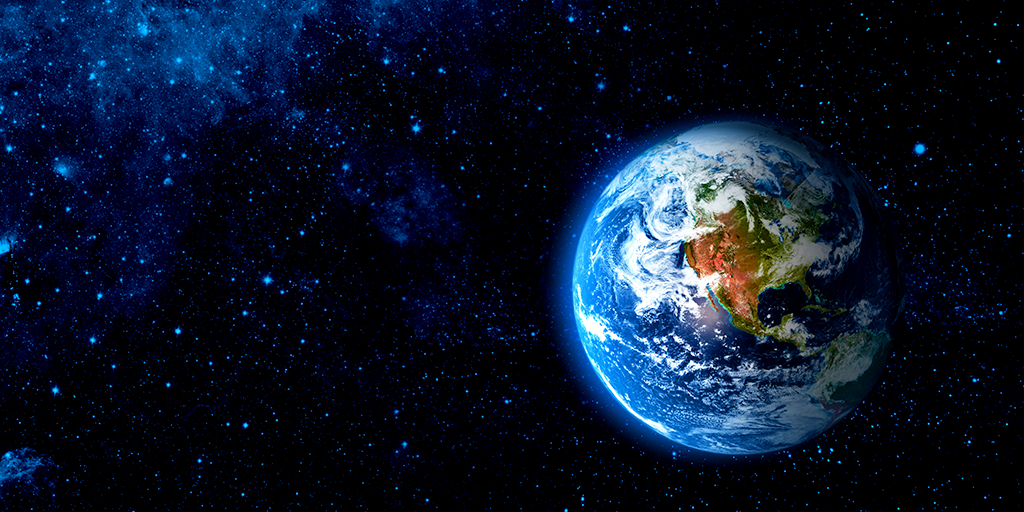
Did you know that...
vi ligger 3:a från solen?
Earth has one moon. Earth orbits the Sun in a circle and is the third planet from the Sun. Earth is closest to the Sun in January and farthest from the Sun in June. Earth is the largest planet in our solar system with a solid core—the other planets are smaller or consist mostly of gas.
Task
Match the planets with their correct names
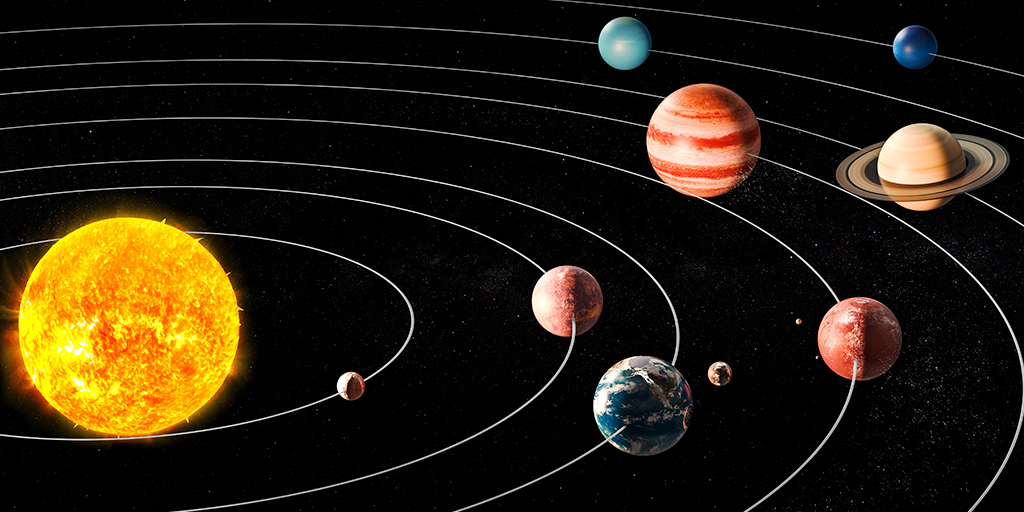
Do you know the names of the planets in our solar system? Match each planet with its correct name.
Write down the correct answers, starting with the sun and working outward.
The Long Journey
Earth has been traveling through space long before we humans existed. It is believed that the planet was formed about 4,500 million years ago!
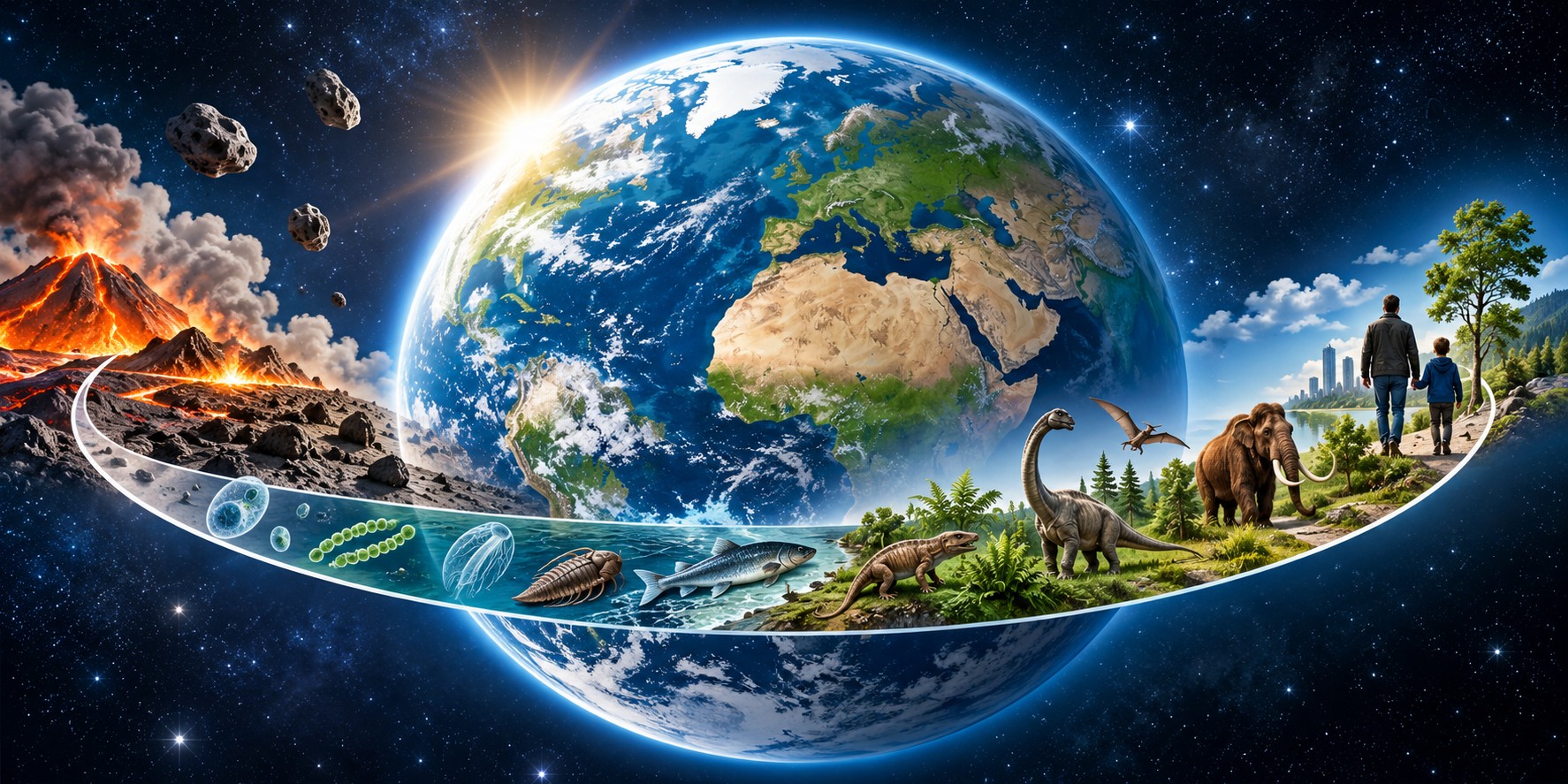
We humans have only been on Earth for a little over 200,000 years. That may sound like a long time, but if we compare it to the time that has passed since the Earth was created, our time on Earth is very short.
Despite this, we’ve managed to wreak havoc and litter the oceans, the land, and the air. Both plants and animals have been affected by the damage we’ve caused during our journey through space.
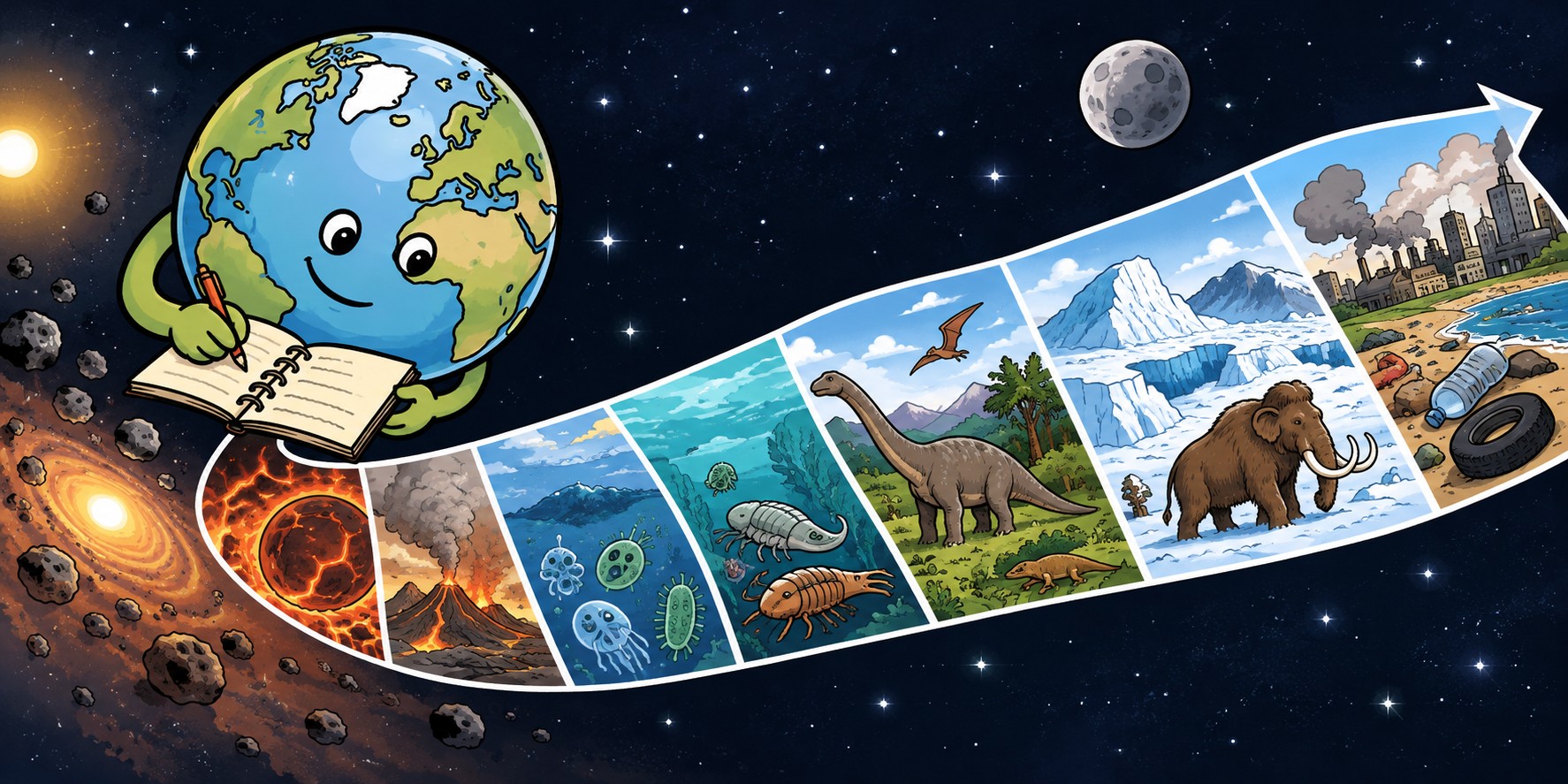
Tellus dagbok
Let’s pretend for a moment that Earth is a spaceship! On the day Earth was created, the planet also began a journey through space. The destination of that journey is today. A day here on Earth has 24 hours.
If we imagine that one day during Earth’s journey through space is 750 million mil long, then the entire journey—from the day the planet was formed until today—took about a week. If Earth had kept a diary of its journey through space, it might have read something like this…
Tellus dagbok - om 4,5 miljarder år, var en vecka!
Måndag: Jorden bildas. Onsdag: Det första livet uppstår i havet. Fredag: Växter och djur börjar leva på land. Lördag eftermiddag: Dinosaurierna tar över jorden. Lördag kväll: . Söndag kväll: De första människorna utvecklas. Söndag, en minut före midnatt: Nutiden.
Måndag, 4 500 miljoner år sedan
Hurraaa! Nu börjar den fantastiska rymdresan! Fast hela måndagen har gått åt att bygga rymdskeppet Tellus, som jag döpte mig själv till.
Tisdag
Hm. Många planeter åker runt solen, jag måste nog hitta en egen plats jag med.
Onsdag, kl 01
Första passagerarna. Jag hittade äntligen en perfekt plats mellan planeterna Venus och Mars! Jag har rest i 800 miljoner år nu. De första levande varelserna klev precis ombord och bosatte sig i havet.
Torsdag
Jag tar det lugnt idag, allt är som det ska!
Fredag
En del varelser som bott i havet i 1 000 miljoner år ville se något nytt. Så de klev upp på land!
Lördag kl 16, på eftermiddagen
Jätteödlorna klevnade precis ombord! Människan kommer om 300 miljoner år.
Lördag kväll
Jätteödlorna stannade bara i två timmar! Eller okej, i 100 miljoner år.
Dinosaurierna dör ut och däggdjuren blir fler.
Söndag kväll, några minuter för midnatt
Där kommer människorna! Oj, vi är redan framme vid 2020-talet!
Our Swedish astronaut!
On December 9, 2006, Christer Fuglesang became the first Swede in space. He traveled aboard the U.S. space shuttle Discovery to the International Space Station (ISS). His mission was to install new components on the space station.
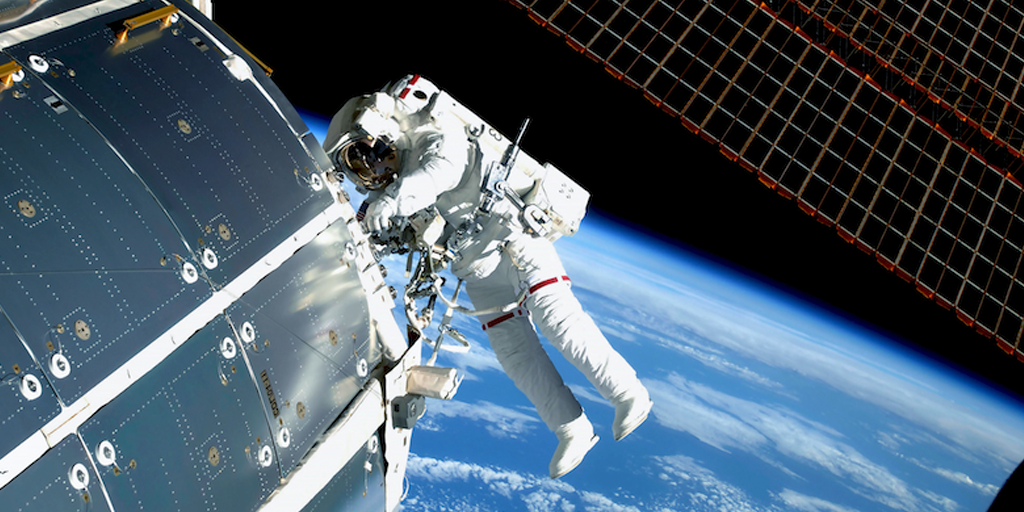
December 21:
I saw Sweden! A couple of hours ago, we flew over Germany, and I looked north. It was nighttime, but the sky was completely clear over all of northern Europe, and I could clearly see Denmark and southern Sweden all the way up to Stockholm. And the Northern Lights above it all.
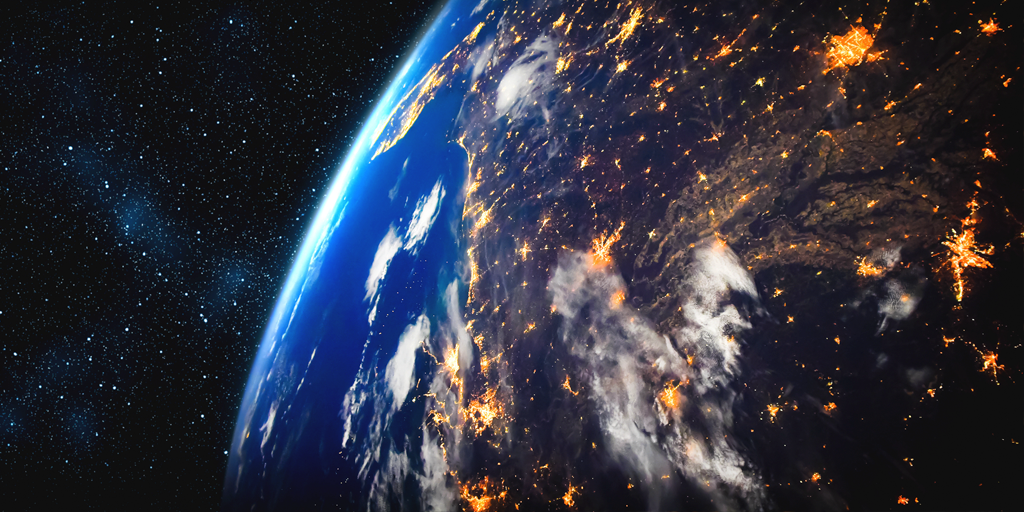
Christer described many times how beautiful our planet is. When he saw Earth from space, he realized more than ever just how precious it is. None of our neighboring planets have an atmosphere, oceans, or temperatures that support life. Even though we can’t all fly out into space to look down on our amazing planet, we can all be good astronauts and take good care of Earth!
Visste du att
Long ago, some people believed that the Earth was flat as a pancake. They thought there was an edge where the Earth ended. And if you walked over the edge, you’d fall into space! Sailors knew that wasn’t true. After all, they had sailed all around the world and never fallen off any edge.
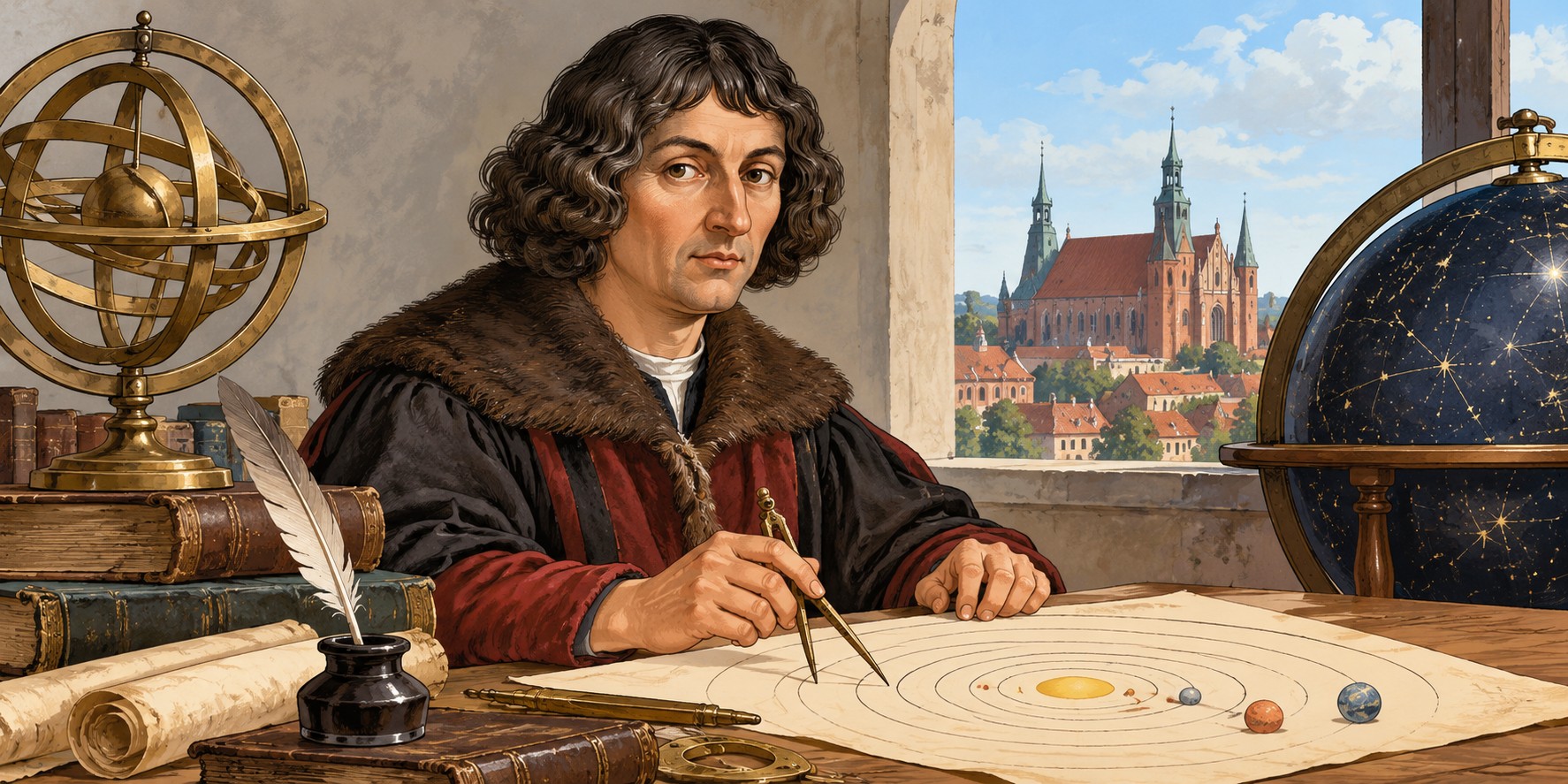
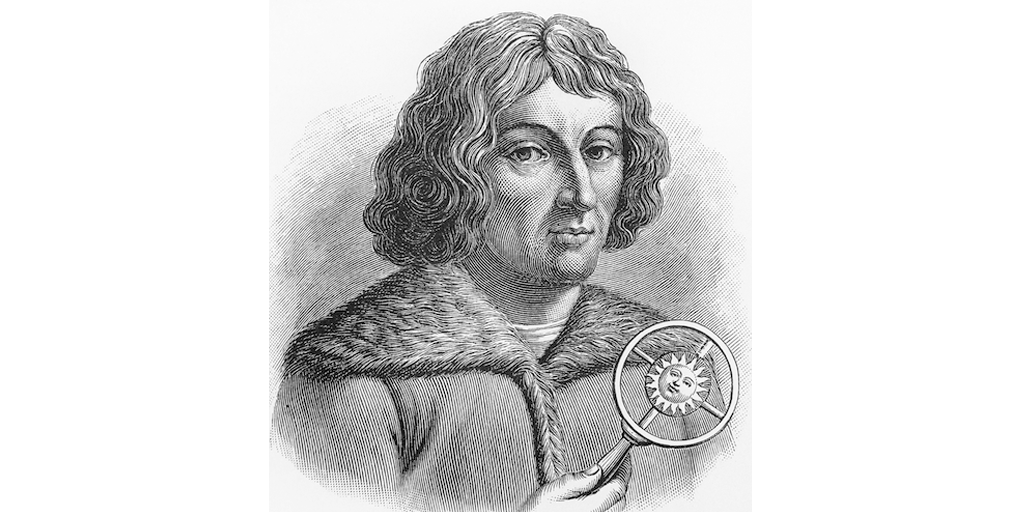
In the 1500s, people also believed that the Earth was the center of the solar system, and that the Sun and the other planets orbited the Earth. The Polish astronomer Copernicus tried to prove that the planets orbit the Sun, but almost no one believed him!

1. Which animal species are the most numerous in the world?
2. Where are there the most animal species?
3. Which of these animals is an omnivore?
4. What do all mammals have in common?
5. What is the name of the system that describes which animals eat what?
6. What is the term for the process by which plants obtain nutrients from sunlight, air, and water in the soil?
7. What substance do plants take in from the air, which they then release as oxygen—the oxygen that we humans need to breathe?
8. What does it mean when a piece of meat is KRAV-certified?
9. Why aren't there piles of dead plants and animals in the forest?
10. What does the word “kretslopp” mean?
11. The right of public access means that we...
12. The atmosphere is...
13. Freshwater is...
14. The sun is our friend, but we must be careful of the sun’s…
Let's become climate heroes together!
Now you’ve read an entire book about our amazing planet. You’ve learned more about how nature works. You’ve realized that nature is fragile and that it needs our help. But compared to the planet, we humans are so small... What can little old me do?
No one can do everything, but everyone can do something!
Mitt löfte till moder jord!
The Earth gives me food to eat, water to drink, and air to breathe —everything I need to live. So now that the Earth needs my help, I want to do my part.
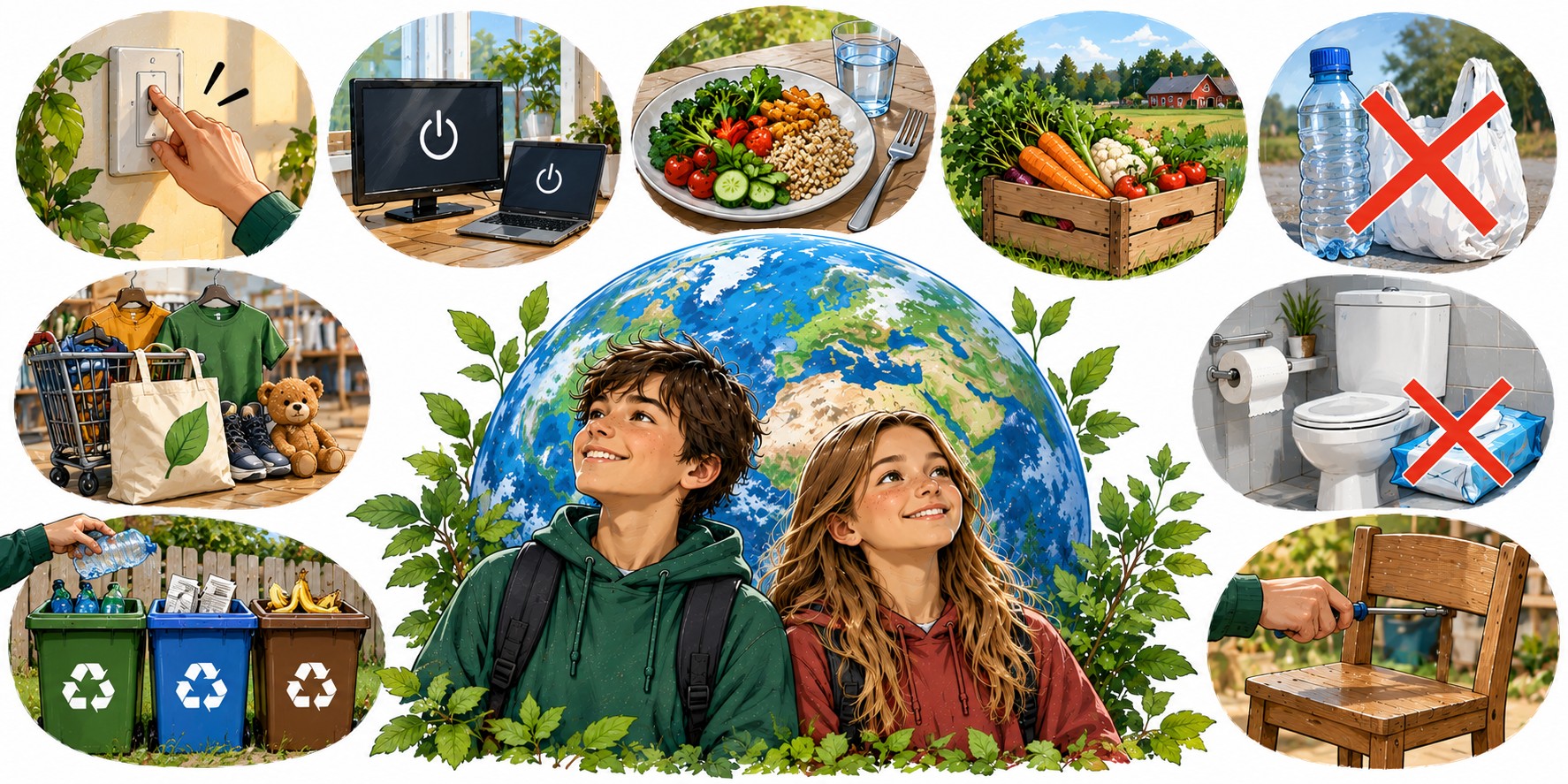
Jorden ger mig mat att äta, vatten att dricka och luft att andas – allt det som jag behöver för att leva. Så nu när jorden behöver min hjälp vill jag ställa upp.
- Släcka lampor där ingen är.
- Stänga av TV:n och datorn.
- Äta vegetariskt några gånger i veckan.
- Köpa ekogoliskt och närproducerat.
- Använda mindre plast.
- Bara köpa saker som jag verkligen behöver.
- Bara kasta papper i toaletten - inget annat.
- Hjälpa till med att sortera soporna.
- Försöka laga saker som gått sönder.